>

Central Neighborhood Residential Communities

Image

Project Overview

Details

  • Square Footage: TBD
  • LEED: TBD

Timeline

  • Start: June 2025
  • Completion: TBD
  • Occupancy: TBD

Project Team

  • Project Manager: Bob Grummon
  • Construction Manager: 
  • Architecture Firm: 

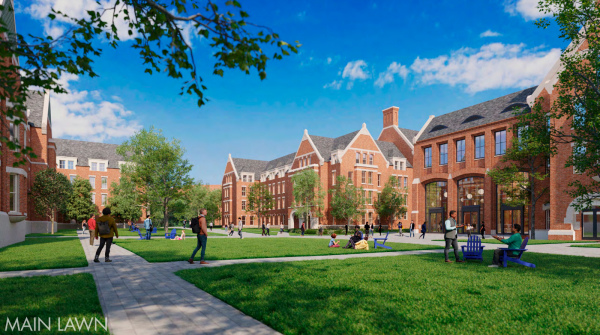
Plans for the reimagined Central Neighborhood include the demolition of its existing residence halls—Branscomb Quadrangle and McTyeire Hall—as well as the University Club to make way for the new residential colleges. Construction could begin as early as summer 2025, with the new residential colleges expected to welcome more than 1,300 students for the 2028–29 Academic Year. 

The four new residential colleges would be designed to support the goals of the university’s residential colleges program by creating spaces for academic experiences beyond the classroom, featuring mixed-use spaces for collaboration, green spaces to promote sustainable living, and a variety of single and suite living options. 

Enhancing the Student Experience

The four new residential colleges would be designed to support the goals of the university’s residential colleges program by creating spaces for academic experiences beyond the classroom, featuring mixed-use spaces for collaboration, green spaces to promote sustainable living, and a variety of single and suite living options.  

“Our vision for the Central Neighborhood reflects Vanderbilt’s commitment to fostering a sense of belonging and intellectual growth,” said Tiffiny Tung, vice provost for undergraduate education. “By creating spaces that integrate living, learning and community engagement, we are continuing to enhance the student experience in ways that prepare students to thrive at Vanderbilt and beyond.”  

Residential colleges are designed to create opportunities for students to pursue integrative learning, dialogue across difference, engage in advocacy, foster leadership potential and forge global connections. They are unique communities where students can grow into future leaders together. By integrating experiential learning into residential life, residential colleges provide students with an abundance of accessible opportunities outside the classroom to get to know their peers, build relationships with faculty, collaborate on immersion projects and expand their interests. 

The colleges also add value to the student experience by deepening students’ knowledge of campus resources that will support their academic success, health and well-being, and by creating dedicated opportunities for students to relax, unwind and connect at weekly study break events and annual signature events and parties.